Leonard Muthende Biography: Education, Wife, Net Worth, Tribe, Qualification
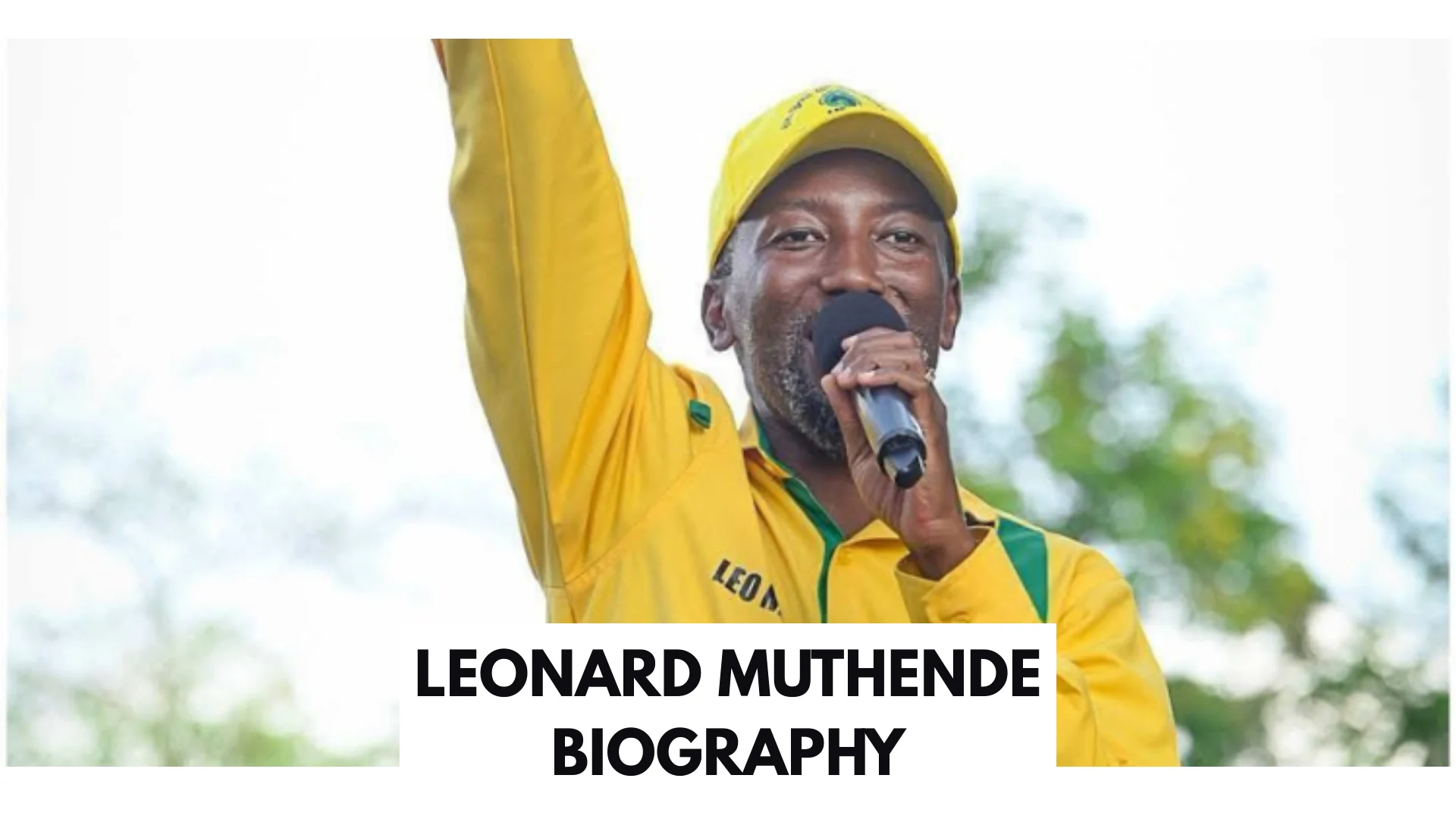
The name Leonard “Leo Wa Muthende” Muthende has recently surged into prominence across Kenyan political discourse. From humble beginnings in a rural village to becoming the freshly elected Member of Parliament for Mbeere North, his journey symbolizes ambition, resilience, and a firm commitment to community development.
In this post, we dive deep into his life history — early years, education, career ventures, political awakening, and what lies ahead for his constituency.
Early Life & Educational Background
Leonard Wa Muthende hails from Kianthawa village in Nthawa ward, Mbeere North Sub-county. Growing up in a region where opportunities were limited, his upbringing exposed him early to the daily struggles of rural families — lack of infrastructure, inadequate educational resources, and limited economic prospects. These formative experiences shaped his drive for better representation and tangible development.
On the academic front, Leo’s journey began at Siakago Primary School, after which he proceeded to St. Paul’s Kevote High School. His academic shine attracted support from organizations like Plan International, which helped sponsor his education.
Ambitious and academically gifted, Leonard went on to study at the University of Nairobi, graduating with a Bachelor’s degree in Biochemistry, First Class Honours. This strong academic foundation gave him not only technical knowledge but also a broader perspective on health systems, pharmaceuticals, and community welfare — skills that would later inform both his business and political pursuits.
Professional Career & Entrepreneurial Ventures
After graduating university, Leo Wa Muthende didn’t immediately dive into politics. Instead, he spent a significant period working with various medical and pharmaceutical firms, where he acquired valuable experience in health systems management, pharmaceutical supply chains, and medical services administration.
In 2006, capitalizing on his expertise and vision, he co-founded his first company in the pharmaceutical industry. Over time, his entrepreneurial drive expanded: by 2023, he had also founded additional firms specializing in medical equipment supply and hospital systems management.
Through these ventures, Muthende not only built personal success, but also established credible roots in the healthcare sector — understanding firsthand challenges in rural health, infrastructure, and access, which later influenced his political campaign promises.
Early Political Ambitions and Grassroots Involvement
Although his initial years were dominated by business, Leonard’s connection to his home region remained strong. The contrast between his corporate success and the developmental gaps in Mbeere North motivated him to give back. He began quietly supporting local community projects, youth empowerment programs, education bursaries, and rural development initiatives.
In 2017, he made his first major political move by contesting for the Embu gubernatorial seat. He ran a campaign grounded in development and reform. However, despite his determination, he was defeated by the incumbent, Martin Wambora.
Though unsuccessful, this early bid provided Leo with exposure to regional politics and a deeper understanding of the political landscape — shaping his future political strategies, building grassroots relationships, and strengthening his credibility as a leader with a vision for change.
The 2025 By-Election & Victory: From Aspirant to MP-Elect
What Triggered the By-Election?
The pivot in Leo Wa Muthende’s political trajectory came in 2025 after the sudden vacancy of the Mbeere North parliamentary seat. The then-sitting MP, Geoffrey Ruku, was appointed Cabinet Secretary for Public Service, thus vacating the seat and triggering a by-election.
Seizing this opportunity, Leo declared his intention to contest under the banner of the ruling party, United Democratic Alliance (UDA).
Campaign Strategy & Promises
Leo’s campaign was grounded in grassroots mobilization. He toured villages and towns across Mbeere North, engaging locals in community barazas (meetings), listening tours, youth gatherings, and open forums. He presented a clear platform centered on:
- Improving infrastructure: road upgrades, rural electrification, and water projects.
- Welfare and education: fair distribution of bursaries, support for free secondary school education (for day schools), and building or refurbishing schools.
- Youth empowerment: job creation, agribusiness support, youth training schemes, and revitalizing local agriculture.
- Healthcare development: leveraging his background in pharmaceuticals/healthcare to improve medical access and hospital infrastructure.
His background — a mix of business success, health sector insight, and grassroots empathy — resonated with many residents, especially youth and families seeking real change.
The Final Vote and Declaration of Winner
On 27 November 2025, the by-election was held. Soon after, the official results came in: Leonard Wa Muthende secured 15,802 votes, narrowly defeating his closest rival, Newton Kariuki (Karish) of the Democratic Party, who garnered 15,308 votes — a margin of just 494 votes.
The announcement sparked jubilation among supporters across Siakago, Mutuobare, Kanyuambora, Ena, and other parts of the constituency. Celebrations included street parades, jubilant rallies, and widespread optimism about what the future might hold under the new MP.
Speaking after his win, the new MP-elect pledged to serve all residents — regardless of how they voted — and promised to fulfill his campaign commitments, especially in education, development projects, and fair distribution of services.
Challenges & Controversies
As with any rising political figure, Leonard Wa Muthende’s journey isn’t without its share of scrutiny and criticism. During the campaign period and beyond, some opponents raised concerns about experience and questioned whether his business background adequately prepared him for legislative responsibilities.
One major point of controversy concerned a contract awarded to one of his companies, alleging under-performance in a medical-oxygen plant project for Kenyatta National Hospital (KNH). The debate sparked dialogue in media and political circles about accountability, transparency, and whether business-linked politicians can separate personal interests from public duty.
Additionally, the narrow margin of his victory — just 494 votes — underscores the divided sentiments in Mbeere North, highlighting that a significant portion of voters remain unconvinced and expect swift, tangible results. This puts pressure on the MP-elect to deliver quickly and efficiently.
What His Victory Means for Mbeere North — And Kenya
Leo Wa Muthende’s ascent to Parliament is more than just a personal win — it reflects several broader trends in Kenyan politics and society:
- Youthful Leadership & New Blood: His win indicates a growing appetite among voters for young, educated, and development-focused leaders who come from non-political business or professional backgrounds — a break from traditional political dynasties.
- Rise of Business-Savvy Politicians: With backgrounds in entrepreneurship and private sector management, such politicians might bring efficiency, accountability, and fresh perspectives to governance, especially in sectors like healthcare, infrastructure, and economic development.
- Increased Grassroots Engagement: Muthende’s success underscores the power of ground-level community engagement, direct communication with constituents, and a clear manifesto, something that resonates more deeply with voters than rhetoric alone.
- Heightened Expectations: With success comes responsibility. Constituents will likely watch his performance closely — particularly in delivering on campaign promises around education, infrastructure, youth empowerment, and healthcare.
- Implications for National Politics: As a UDA MP-elect, Muthende becomes part of a larger political network aligned with the current Kenyan government. His effectiveness could influence how Kenya’s leadership approaches policy making, especially in rural development and youth empowerment.
FAQs
Q: Who is Leonard Muthende?
A: Leonard “Leo Wa Muthende” Muthende is a Kenyan entrepreneur, health-sector professional, and politician. In November 2025, he was elected MP-elect for Mbeere North constituency in Embu County.
Q: What is his educational background?
A: He attended Siakago Primary School, St. Paul’s Kevote High School, and later graduated from the University of Nairobi with a BSc in Biochemistry, First Class Honours.
Q: What businesses did he run before entering politics?
A: He worked in various pharmaceutical and medical firms and eventually co-founded companies in the healthcare sector, including medical equipment supply and hospital systems management firms.
Q: Which party does he belong to?
A: He is a member of the United Democratic Alliance (UDA), the current ruling party in Kenya.
Q: What were his main campaign promises?
A: His main pledges included improved road infrastructure, rural electrification, water projects, education bursaries and free day-school secondary education, youth empowerment programs, and improved healthcare services.
Conclusion
Leonard “Leo Wa Muthende” Muthende’s rise from a rural village in Embu County to the halls of Parliament epitomizes a new wave of Kenyan leaders — young, educated, business-savvy, and deeply rooted in development-driven visions.
His victory in the 2025 Mbeere North by-election underscores a shift in voter expectations: away from traditional political elites to leaders who genuinely understand their struggles, speak their language, and offer tangible solutions.
Yet, with narrow margins and high anticipations, Muthende faces a formidable task. To justify voter trust, he must quickly translate his campaign promises into real-world change: better roads, schools, accessible healthcare, youth opportunities, and transparent governance.
If he succeeds, his journey could inspire many more — showing that with education, experience, and empathy, one can rise from the grassroots to national leadership, and truly make a difference.

Cyrus Jirongo Biography: Death, Politics, Wife, Tribe, Career, Wife, Children
William Ruto Biography: Politics, Tribe, Parents, Education, Wife, Age & Net Worth 2025
Martin Kpebu Biography: Parents, Wife, Tribe, Children, Education
About The Author
