Quentin Bryce Biography: Husband, Age, Net Worth, Wikipedia, Education, Career
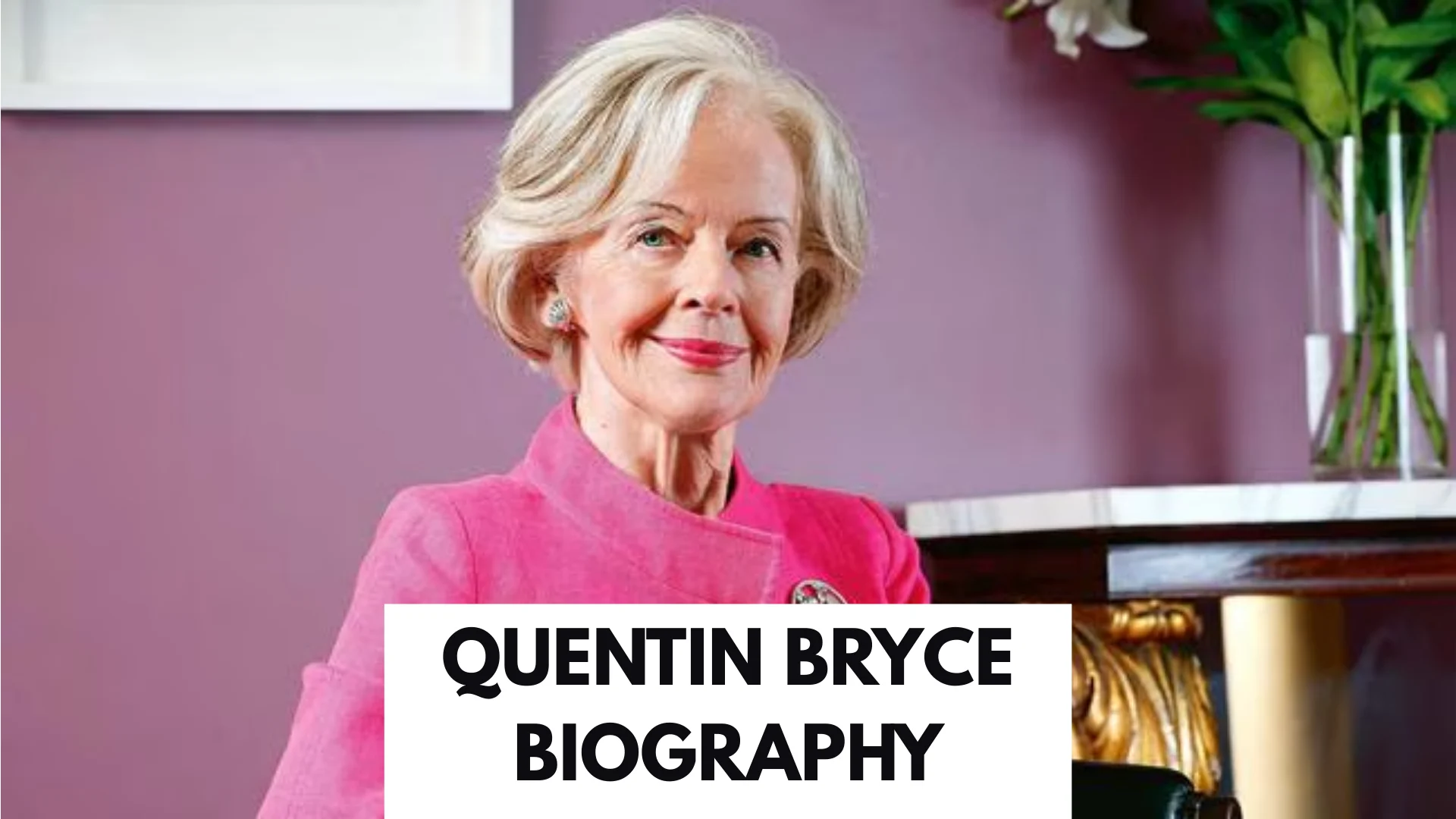
Dame Quentin Alice Louise Bryce is one of Australia’s most influential public figures over the past five decades. A lawyer, academic and advocate for human rights and gender equality, Bryce broke multiple glass ceilings — culminating in her appointment as Australia’s first female Governor-General in 2008. Her life story weaves law, public service and persistent advocacy for women, children and vulnerable communities.
Early life and education
Quentin Bryce was born Quentin Alice Louise Strachan in Brisbane on 23 December 1942 and spent parts of her childhood in regional Queensland. She completed schooling in Brisbane and went on to study at the University of Queensland, earning both a Bachelor of Arts and a Bachelor of Laws. Early on she entered the legal profession at a time when relatively few women practised law in Queensland, becoming one of the first women called to the Queensland Bar.
Academic career and early advocacy
In 1968 Bryce became the first woman appointed to the faculty at the University of Queensland’s law school, where she lectured until the early 1980s. During these formative academic years she authored and taught on employment discrimination and human-rights topics, fostering both legal scholarship and practical approaches to equality. Her academic career gave her a platform to move into public policy and advocacy focused on women’s rights and family issues.
From public service to national profile
Bryce’s transition from academia to public service was gradual but definitive. She served as director of the Queensland Women’s Information Service and later as Queensland director for the Human Rights and Equal Opportunity Commission. In 1988 she was appointed Federal Sex Discrimination Commissioner — a role in which she pushed for systemic change to reduce discrimination against women and children across employment and social policy.
Governor of Queensland (2003–2008)
In 2003 Quentin Bryce was appointed Governor of Queensland, representing the Crown in the state and undertaking a broad program of community engagement. Her term focused on advocacy for families, women, Indigenous communities, and rural and regional Australians. The role elevated her national profile and prepared her for a subsequent, historic national appointment.
First woman Governor-General of Australia (2008–2014)
On 5 September 2008 Bryce was sworn in as Australia’s 25th Governor-General, becoming the first woman to hold the office. Her appointment represented a symbolic milestone for women in Australian public life and placed her at the centre of national ceremonial and constitutional duties. Her term included outreach to remote and disadvantaged communities and public engagements around human rights and social inclusion.
Key initiatives and public positions
While Governor-General is primarily a non-partisan, ceremonial role, Bryce used the platform to highlight issues close to her long career: domestic violence prevention, children’s welfare, gender equality, and reconciliation with Indigenous Australians. In later years she also made comments that were widely reported as supportive of an Australian republic and same-sex marriage, reflecting her longstanding engagement with social reform debates.
Honours and awards
Across her career Bryce has received numerous honours recognizing service to the community and leadership. She has been appointed Officer of the Order of Australia (AO), Companion of the Order of Australia (AC), and invested as a Commander of the Royal Victorian Order (CVO). She was also created a Dame of the Order of St John and has received state and international honours for her contributions to public life.
Personal life and post-G-G work
Bryce married architect Michael Bryce in 1964 and together they raised five children. After finishing her term as Governor-General in 2014 she stayed active in public life, chairing taskforces (for example, on domestic and family violence in Queensland), supporting charities, and remaining an outspoken advocate for equality and children’s welfare. Her contemporary role is that of elder stateswoman — shaping public conversation and mentoring new leaders.
Impact and legacy
Quentin Bryce’s legacy is threefold: breaking institutional gender barriers at state and national levels; elevating human-rights issues into mainstream public discourse; and modelling the use of ceremonial office to advocate for vulnerable populations. Her trajectory — from regional Queensland to Australia’s vice-regal office — shows how legal expertise, public service and persistent advocacy can combine to create lasting social influence.
Frequently Asked Questions (FAQ)
When and where was Quentin Bryce born?
She was born in Brisbane on 23 December 1942.
What education did Quentin Bryce receive?
She earned a Bachelor of Arts and a Bachelor of Laws from the University of Queensland and later lectured in law at the same university.
What important roles did she hold before becoming Governor-General?
Bryce served as the Queensland director of the Human Rights and Equal Opportunity Commission, Federal Sex Discrimination Commissioner, and Governor of Queensland (2003–2008).
When was she Governor-General and why is it significant?
She served as Governor-General from 5 September 2008 to 29 March 2014 and was the first woman to hold the office — a major milestone for gender representation in Australia.
What honours has Quentin Bryce received?
Among others, she is a Companion of the Order of Australia (AC), a Commander of the Royal Victorian Order (CVO), and has been recognised for service to women, children, and the community.
Conclusion
Dame Quentin Bryce’s life is a blueprint of sustained public service: academic rigour, legal advocacy, community leadership, and vice-regal presence. Her career demonstrates how influence can be built progressively — through scholarship, public administration and principled advocacy — and then used to raise attention to social justice issues at the highest levels of civic life. Australia’s first female Governor-General left a legacy that combines symbolic progress with tangible programs supporting women, children and marginalized communities. For anyone studying leadership, gender in governance, or modern Australian public life, Quentin Bryce remains a central and inspiring figure.
Cyrus Jirongo Biography: Death, Politics, Wife, Tribe, Career, Wife, Children
Lieutenant-General Nhlanhla Mkhwanazi Biography: Career, Net Worth, Age, Wife
Dennis Itumbi Biography: Tribe, Family, Net Worth, Age, Nationality
About The Author
