Orson Welles Biography: Wikipedia, Cause of Death, Net Worth, Children, Films
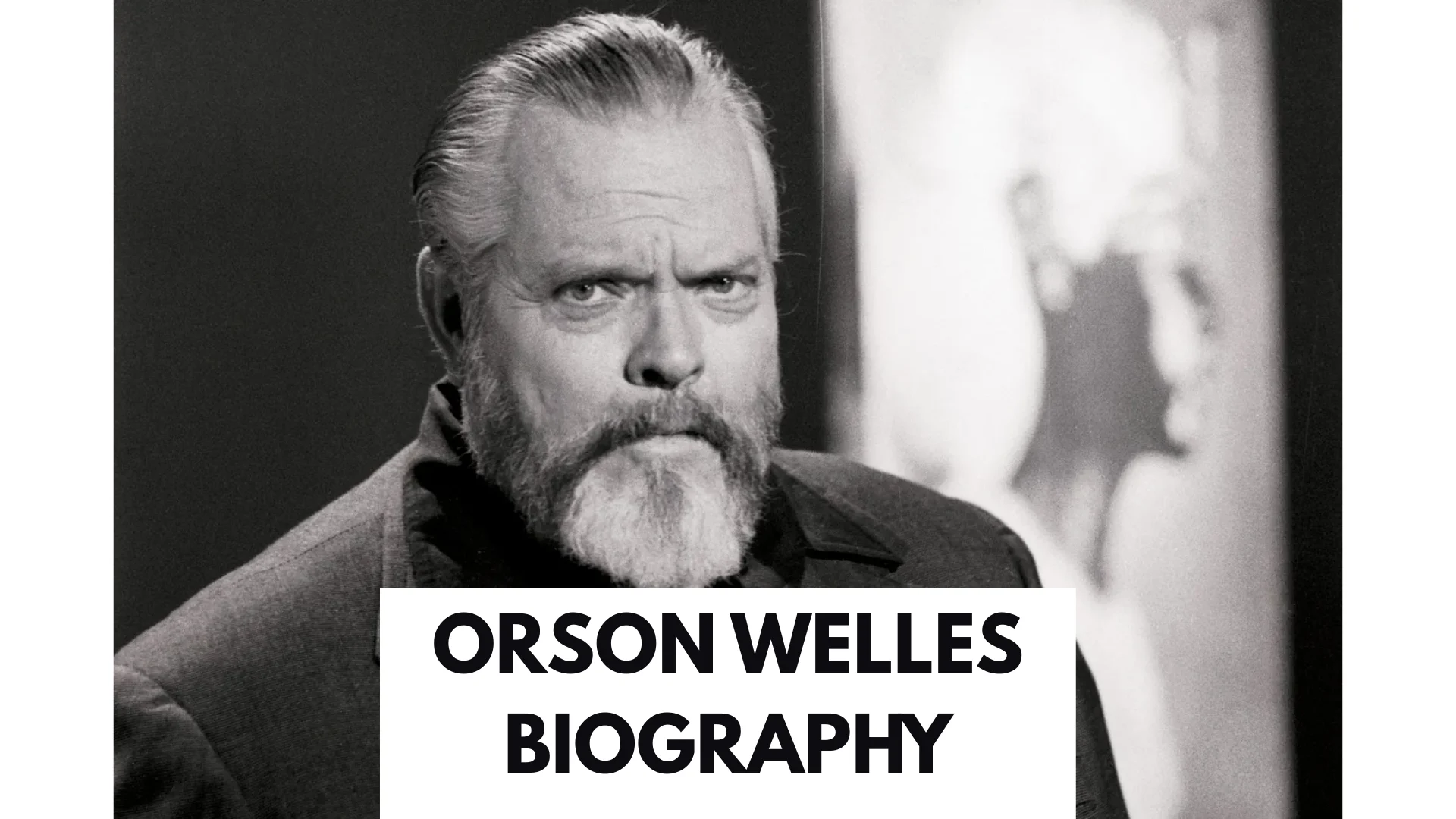
Orson Welles is one of the 20th century’s most influential and controversial creative figures. Celebrated as a cinematic genius for his debut feature Citizen Kane, notorious for shaking the public with the 1938 War of the Worlds radio broadcast, and respected as an innovative stage director and actor, Welles’ career defies easy summary. This Orson Welles biography explores his early life, meteoric rise, battles with the film industry, creative evolution, later career, and lasting legacy — giving context to why the phrase “Orson Welles biography” summons images of daring experiments in storytelling, studio battles, and unmatched charisma.
Early Life and Education
George Orson Welles was born on May 6, 1915, in Kenosha, Wisconsin. The son of Rebecca (a pianist) and Richard Welles (a lawyer and inventor), Orson exhibited theatrical talent from a young age. His parents separated early and he was raised primarily by his mother and maternal grandparents. Welles’ upbringing included travel across the United States and Europe, exposure to literature and music, and a voracious appetite for performance.
He briefly attended the Todd School for Boys in Woodstock, Illinois, where he excelled in drama and began directing school productions. By his late teens, he was already performing professionally on stage and radio. Welles’ precocious talent and confident voice made him a natural for radio drama — a medium he would transform.
The Mercury Theatre and Radio Breakthroughs
In 1937 Orson Welles co-founded the Mercury Theatre in New York with producer John Houseman. The company produced imaginative, modernized stage adaptations of classics, instantly gaining critical attention. But Welles’ most famous early work came via radio. The Mercury Theatre on the Air presented lush, dramatic adaptations, and on October 30, 1938, Welles directed and narrated a radio adaptation of H.G. Wells’ The War of the Worlds.
The broadcast’s realistic delivery — presented as a series of interrupted news bulletins — reportedly caused panic among listeners who missed the opening disclaimers, catapulting Welles to national fame and controversy. Whether or not the panic was as widespread as reported, the event showcased Welles’ dramatic instincts and understanding of media’s power: he could bend form and manipulate audience expectations.
Hollywood Arrival and Citizen Kane
Hollywood came knocking quickly. RKO Pictures brought Orson Welles to Hollywood with unprecedented creative freedom, a rarity for a young director. In 1941, Welles co-wrote, directed, produced, and starred in Citizen Kane, a film inspired in part by the life of newspaper magnate William Randolph Hearst. The movie’s nonlinear narrative, inventive cinematography (with Gregg Toland), deep-focus shots, and layered sound design redefined cinematic possibilities.
Initially controversial, Citizen Kane is now often ranked among the greatest films ever made. Despite critical acclaim, its release provoked the ire of powerful interests — notably Hearst — which limited its box-office impact and contributed to an early political and commercial setback in Welles’ film career.
Battles with Studios and Creative Compromises
After Citizen Kane, Welles faced persistent battles with studio executives and financiers. Projects were shelved, cut, or reedited against his wishes. His second major film, The Magnificent Ambersons (1942), was heavily re-cut and re-shot by the studio while Welles was in Brazil shooting another project. The original vision was compromised — a recurring theme in his filmography.
Welles’ mercurial independence made him both a creative pioneer and a difficult collaborator in the studio system. Money, distribution, and creative control were constant challenges. Still, he produced a string of stylistically daring films: The Stranger (1946), The Lady from Shanghai (1947), Macbeth (1948), and Othello (1951) — each revealing different facets of his genius: stylistic bravado, stagecraft, and willingness to experiment.
Acting Career and Later Films
As film projects became harder to mount on his terms, Orson Welles increasingly turned to acting and international co-productions to finance his films. Welles’ commanding presence and distinctive voice made him a sought-after character actor. He delivered memorable supporting performances in films such as The Third Man (1949) and Touch of Evil (1958) (which he also directed — and later saw his version reassembled closer to his intent), and many others through the 1960s and ’70s.
Many of his later directorial efforts were filmed on shoestring budgets, often abroad, and some remained incomplete at his death. Despite financial and logistical difficulties, these works — ranging from noir to Shakespeare adaptations — display Welles’ ongoing inventiveness.
Theater, Radio, and Other Pursuits
Orson Welles never abandoned theater or radio. After Mercury, he continued to stage innovative productions, combining period detail with modern staging and cinematic sensibilities. He returned periodically to radio, where his voice and storytelling style continued to captivate audiences. Welles also worked in television and commercial voiceovers, lending his voice to documentaries and ads, becoming a ubiquitous presence across media.
His theater productions, like his films, often reflected an appetite for bold reinterpretation — cutting through traditional staging to find psychological truths and theatrical immediacy.
Personal Life
Welles’ personal life was as dramatic as his professional one. He married several times and had a number of high-profile relationships. A charismatic and larger-than-life figure, he was famous for his appetite for food, drink, and conversation. Welles was also politically engaged and public about his views, sometimes aligning with liberal causes.
Final Years and Death
During his later years, Welles continued to juggle acting gigs to fund personal projects. He remained a presence on stage, screen, and radio, even as many of his film projects remained unfinished. Orson Welles died on October 10, 1985, in Hollywood at the age of 70. His death marked the end of an era for a creative who single-handedly reshaped 20th-century storytelling in multiple media.
Legacy and Influence
The Orson Welles biography cannot be measured solely by films released or awards won. His true legacy lies in the bold formal experiments and the relentless challenge he posed to conventional storytelling. Directors, playwrights, radio artists, and actors cite Welles as an inspiration. Film schools dissect Citizen Kane; radio historians revisit the War of the Worlds broadcast; theater directors still draw from his staging innovations.
Welles’ struggles with studios also highlighted the tension between art and commerce — a narrative that continues to inform discussions about creative control in filmmaking. Even his unfinished works, fragments, and re-edits have become study material: a living archive of what one visionary could attempt, even under constraint.
Frequently Asked Questions (FAQs)
When and where was Orson Welles born?
Orson Welles was born on May 6, 1915, in Kenosha, Wisconsin, USA.
What is Orson Welles’ most famous film?
Citizen Kane (1941) is widely regarded as his most influential film and one of the greatest films in cinematic history.
Did Orson Welles cause panic with a radio broadcast?
Welles directed the 1938 radio adaptation of The War of the Worlds, which was presented as realistic news bulletins. The broadcast reportedly caused panic among listeners who missed the opening disclaimers, and it became a defining moment in radio history.
Why did Orson Welles have difficulty in Hollywood?
Welles often clashed with studio executives over creative control. His ambitious projects sometimes ran over budget, and studios frequently reedited or shelved his films, limiting his ability to consistently produce films exactly as he intended.
What other media did Welles work in besides film?
In addition to film, Welles was a major figure in theater and radio. He also acted in many films directed by others, worked in television, and did voice-over work.
When did Orson Welles die?
He died on October 10, 1985, in Hollywood, California.
Conclusion
This Orson Welles biography highlights a life of towering creativity, frequent friction, and lasting innovation. From a young stage prodigy to a radio provocateur, from a groundbreaking filmmaker to a beloved character actor, Welles never stopped pushing the boundaries of storytelling. His life reminds us that genius often comes hand in hand with struggle, and that true influence is felt not only in finished masterpieces but in the audacity to invent new forms. For anyone searching for “Orson Welles biography,” the story is of a restless artist — imperfect, inspiring, and impossible to ignore.
John Farnham Biography: Career, Age, Net Worth, Wikipedia

Farhana Bhat Biography: Age, Net Worth, Boyfriend, TV Show, Education, Religion

Gaurav Khanna Biography: TV Shows, Instagram, Age, Net Worth, Family
About The Author
