Rosa Parks Biography: Family, Parents, Education, Net Worth, Age
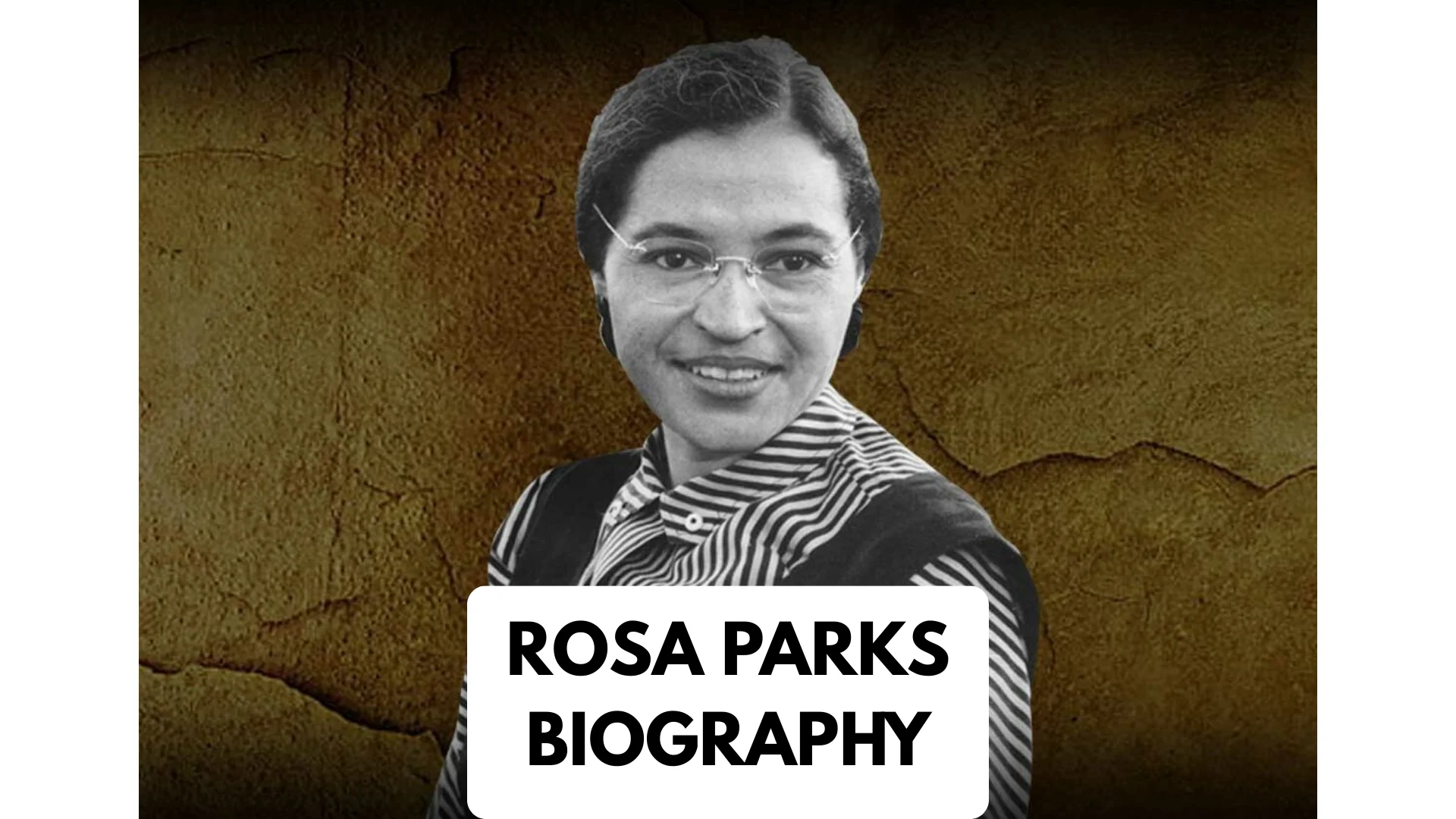
Rosa Louise McCauley Parks (February 4, 1913 – October 24, 2005) is remembered as one of the most influential figures in the American civil rights movement.
Her refusal to give up her seat on a Montgomery, Alabama bus on December 1, 1955, became a pivotal act of peaceful resistance that helped spark the Montgomery Bus Boycott — an organized protest that traveled far beyond a single city and helped ignite a nationwide movement for racial justice.
Early life and education
Rosa Parks was born Rosa Louise McCauley in Tuskegee, Alabama, in 1913. She grew up during an era of entrenched Jim Crow segregation in the South. After her parents separated, Rosa moved to live with her maternal grandparents in Pine Level, Alabama, where she attended segregated public schools. Later she attended the Montgomery Industrial School for Girls and completed her schooling at the Alabama State Teachers College for Negroes (now Alabama State University) through a continuation program. Her early years exposed her to both the harsh realities of systemic racism and the importance of community, education, and faith — influences that would shape her activism.
Marriage, early adult life, and activism
In 1932 Rosa McCauley married Raymond Parks, a barber and an active member of the local Black community. Raymond’s encouragement and commitment to racial justice reinforced Rosa’s own resolve. In Montgomery, Rosa worked as a seamstress and became increasingly involved with civic organizations. She joined the National Association for the Advancement of Colored People (NAACP), eventually serving as a secretary for the Montgomery chapter. Her work with the NAACP and local groups introduced her to a network of activists and sharpened her understanding of legal and grassroots strategies to challenge segregation.
The Montgomery bus incident — December 1, 1955
On December 1, 1955, Rosa Parks was riding a Montgomery city bus after a day of work. The bus driver ordered Parks and three other Black passengers to give up their seats for white passengers. Parks refused to move. She was arrested, charged with violating a local segregation ordinance, and fined. Although others had resisted bus segregation before, Parks’s arrest became emblematic because local leaders and organizations chose her case as the focus for a coordinated response. Her steady, respectful demeanor and long-standing activism made her an ideal figure around whom a broader protest could coalesce.
The Montgomery Bus Boycott
Following Parks’s arrest, the local Black community — organized by groups such as the Women’s Political Council and the newly formed Montgomery Improvement Association (MIA) led by Dr. Martin Luther King Jr. — launched a mass boycott of the city buses on December 5, 1955. The boycott lasted 381 days, during which some 40,000 African American riders refused to use the bus system, choosing instead to carpool, walk, or find other means of transportation. The boycott demonstrated the economic and moral power of disciplined nonviolent protest and led to a federal court decision that declared segregation on public buses unconstitutional in Browder v. Gayle. The boycott is widely regarded as a major turning point in the Civil Rights Movement.
Legal battle and national impact
The legal challenge that followed the boycott culminated in a U.S. District Court ruling (Browder v. Gayle) that declared bus segregation unconstitutional; the Supreme Court affirmed that decision in 1956. Parks’s arrest and the boycott helped propel younger leaders, including Dr. King, into national prominence and proved that coordinated legal and nonviolent direct action could win landmark victories. The movement’s success in Montgomery became a blueprint for later campaigns across the South.
Later life and continued activism
After the boycott, Parks and her husband faced economic and personal pressure; threats and job difficulties eventually led them to move to Detroit in 1957. In Detroit, Parks continued civil rights work: she worked for U.S. Representative John Conyers and remained active in causes tied to voting rights and social justice. She received numerous awards and honors later in life, including the Presidential Medal of Freedom and the Congressional Gold Medal. Throughout, she emphasized collective action and the contributions of many organizers and ordinary people.
Myths and fuller historical picture
Popular narratives often portray Parks simply as a tired seamstress who refused to move. While Parks herself sometimes described her refusal as a matter of dignity and fatigue, historians have clarified that she was a seasoned activist who had long fought against segregation and injustice. Biographers — including recent scholarship — have emphasized her sustained political work and the deliberate strategic choices made by civil rights groups to center her case. That fuller portrait adds depth to her legacy: Parks was both an individual of quiet resolve and a lifelong organizer.
Legacy and honors
Rosa Parks is commemorated across the United States and around the world. Schools, museums, streets, and memorials bear her name. The bus on which she refused to move is preserved at The Henry Ford museum. In 2013 and beyond, anniversaries of the boycott and Parks’s birthday have been occasions to reflect on civil rights progress and ongoing struggles for racial justice. Parks is commonly called “the mother of the civil rights movement,” a title that underscores both her symbolic power and the grassroots networks that made change possible.
FAQs
Who was Rosa Parks?
Rosa Parks was a Black civil rights activist best known for refusing to give up her bus seat in Montgomery, Alabama, in 1955 — an act that helped ignite the Montgomery Bus Boycott.
Why is Rosa Parks important?
Her arrest and the boycott that followed demonstrated the effectiveness of nonviolent protest and community organizing, helping to spark the modern Civil Rights Movement and produce legal victories against segregation.
Was Rosa Parks the first person to resist bus segregation?
No. Others, including Claudette Colvin and Mary Louise Smith, resisted before Parks. But Parks’s case was chosen by local leaders as the test case because of her standing in the community and her reputation as a committed activist.
What happened after the Montgomery Bus Boycott?
The boycott ended after the Supreme Court affirmed a federal ruling that declared Montgomery’s bus segregation laws unconstitutional. Parks moved to Detroit in 1957 and continued civil rights work.
How is Rosa Parks remembered today?
Parks is honored with awards, memorials, schools, and museums. Her act of resistance remains a powerful symbol of peaceful protest and civic courage.
Conclusion
Rosa Parks’s life is a reminder that history often turns on both singular acts of courage and long, patient organizing behind the scenes. Her refusal to give up a bus seat became, through community mobilization and legal challenge, a defining event in the struggle for civil rights. Beyond the iconic moment, Parks’s life demonstrates sustained commitment to justice, making her legacy both inspirational and instructive for those who continue to fight for equality today.

Sweet Guluva Biography: Real Name, Career, Net Worth, Age, Family, Girlfriend

Deepika Padukone Biography: Awards, Religion, Husband, Children

LoFiLulla (Singer) Biography: Songs, Wikipedia, Age, Real Name, Net Worth
About The Author
