Benjamin Netanyahu Biography: Education, Religion, Age, Net Worth, Wikipedia
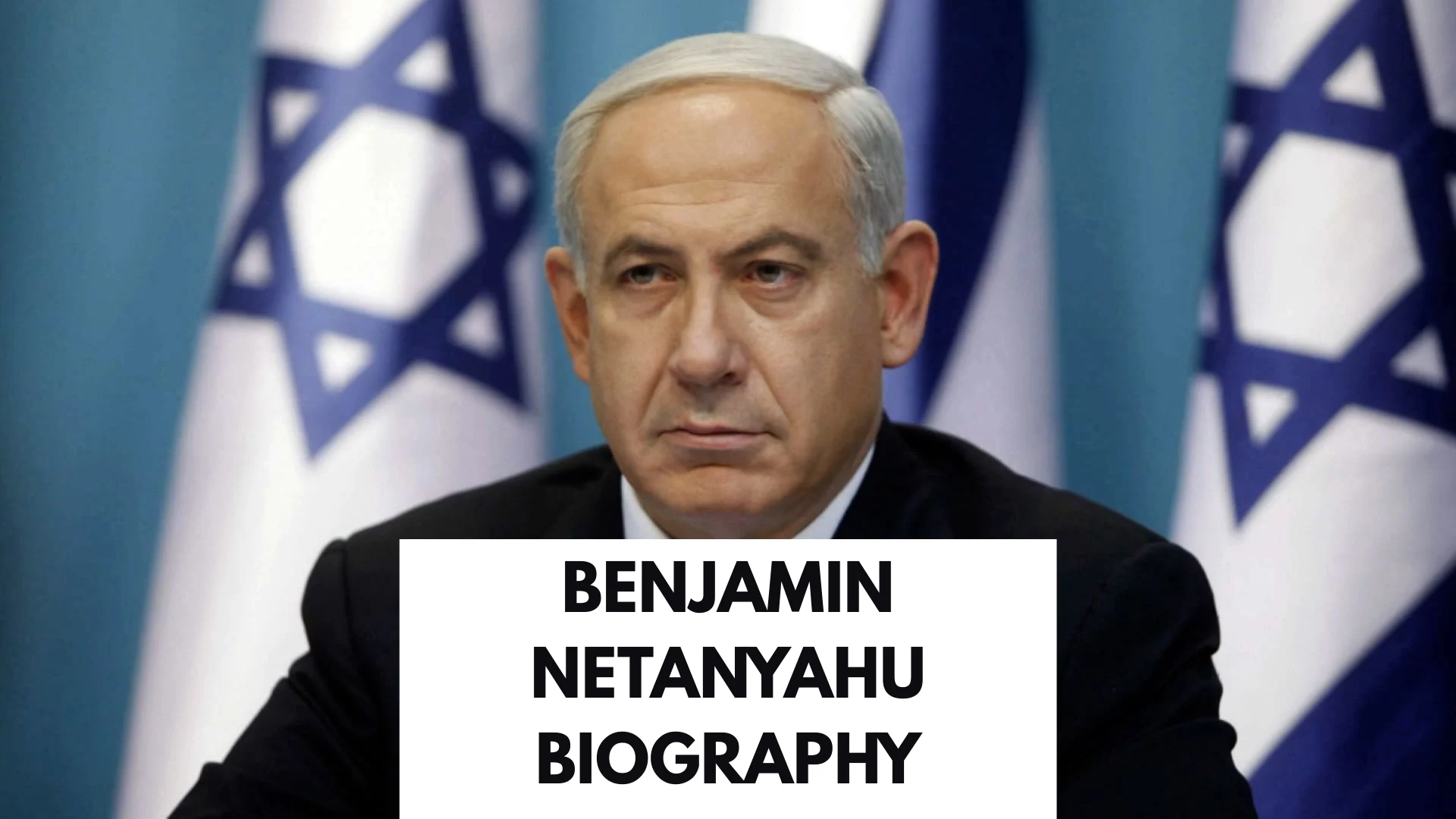
Benjamin (Bibi) Netanyahu is one of the most consequential and polarizing figures in modern Israeli history. Serving multiple terms as prime minister across decades, he reshaped Israel’s domestic politics, security posture, and relations with the world.
This biography traces his early life, military service, ascent in diplomacy and politics, major policies, controversies, and the legacy he is likely to leave behind.
Early Life and Family
Benjamin Netanyahu was born in Tel Aviv in 1949 into a family with intellectual and Zionist roots. His father, Benzion Netanyahu, was a historian and scholar of Jewish history; his mother, Tzila, was involved in teaching and community work. Netanyahu spent parts of his childhood in the United States, where his father worked and the family gained a bilingual, bicultural perspective that later shaped Benjamin’s facility with Western leaders and media.
Education and Early Influences
Netanyahu attended high school in Israel and later studied in the United States. He earned a B.A. in architecture from the Massachusetts Institute of Technology (MIT) and an M.S. from MIT’s program as well as attending Harvard’s Graduate School of Business (short, non-degree programs). His exposure to both Israeli military culture and elite American institutions informed his worldview: pragmatic security-first politics married to savvy media and diplomatic skills.
Military Service
Netanyahu served in the Israel Defense Forces (IDF) in the late 1960s and 1970s, joining the elite Sayeret Matkal special forces unit. He participated in high-risk operations, including the famous 1976 Entebbe hostage-rescue operation—an experience often cited as formative in his outlook on leadership and national security. His military background lent him credibility on defense matters, which he leveraged throughout his political career.
Entry into Diplomacy and Politics
After military service, Netanyahu worked for Israel’s diplomatic corps, including a high-profile stint as Israel’s deputy ambassador to the United Nations in the 1980s. He developed skills in public diplomacy and learned to present Israel’s narrative on the global stage.
Netanyahu entered electoral politics in the 1980s and 1990s, initially as a member of the Likud party. He served as Finance Minister and in other posts before being elected prime minister for the first time in 1996, becoming the youngest person to hold the office at that time.
First Term and Return to Power
Netanyahu’s first tenure (1996–1999) was marked by a conservative approach to peace negotiations and economic reforms aimed at privatization and liberalization. After a period out of the premiership, which included time as an opposition leader and as foreign minister, he returned to power in 2009 and then again through subsequent election cycles, ultimately becoming Israel’s longest-serving prime minister.
Major Policies and Political Platform
Netanyahu’s political identity rests on several pillars:
-
Security-first approach: Emphasis on strong defense, preemption, and skepticism towards concessions without strong guarantees. He frequently framed Iran’s nuclear program as an existential threat and prioritized preventing Tehran from obtaining nuclear weapons.
-
Economic policy: Advocated market-oriented reforms, privatization, and measures aimed at boosting high-tech growth and foreign investment. Israel’s tech sector flourished during much of Netanyahu’s tenure, contributing to GDP growth and global stature as a “startup nation.”
-
Settlements and the West Bank: Netanyahu’s governments often supported settlement expansion or maintained policies that limited the scope of territorial concessions—this has been a focal point of international criticism and domestic debate.
-
Diplomacy and alliances: While maintaining close ties with the United States, Netanyahu also expanded relations with non-traditional partners, culminating in landmark normalization agreements with several Arab states (e.g., the Abraham Accords—2000s–2020s diplomacy saw acceleration under his leadership).
Controversies and Legal Challenges
Netanyahu’s political life has been marked by sharp controversies and legal entanglements. Media scrutiny and opposition critics accused him of eroding democratic norms—claims he denies, attributing attacks to political adversaries. High-profile legal cases led to indictments on charges including bribery, fraud, and breach of trust; Netanyahu has contested the charges and portrayed them as politically motivated. These legal battles reshaped Israeli politics and public discourse, polarizing supporters and opponents.
Coalition Politics and the Fragmented Knesset
Israel’s multi-party system forced Netanyahu to master coalition-building. Over the years, he allied with religious and right-wing parties to secure majorities, sometimes at the cost of contentious policy concessions. His ability to navigate coalition dynamics was a political strength but also led to compromises that generated domestic criticisms.
Legacy on Security and Foreign Policy
Netanyahu’s long tenure cemented a security doctrine focused on deterrence, intelligence, and maintaining a qualitative military edge. He is widely credited with elevating global awareness about Iran’s nuclear ambitions and pushing for tougher sanctions and international pressure. Simultaneously, his policies and rhetoric contributed to strained relations with parts of the international community and deepened regional polarization.
Economic and Technological Legacy
Under Netanyahu, Israel’s tech sector became a global powerhouse. Policies boosting investment, R&D incentives, and fostering public-private collaboration helped grow a high-tech ecosystem. Israel’s economic resilience in certain years was attributed, in part, to these policy priorities.
Personal Style and Public Image
Netanyahu’s rhetorical skills, command of English, and media savvy made him a formidable global interlocutor. Nicknamed “Bibi,” he cultivated a public persona of toughness and pragmatism. Critics view that persona as emblematic of uncompromising policies; supporters see it as necessary realism.
Health, Family, and Private Life
Netanyahu’s private life—marriages, family relationships, and personal milestones—has occasionally intersected with his public profile but generally remained secondary to his political identity. Family members have been active in both public and private sectors.
Assessment and Ongoing Debates
Netanyahu’s record is complex: economic and technological achievements, diplomatic openings with some Arab states, and strengthened defense posture counterbalanced by allegations of corruption, social polarization, and contentious settlement policies. Historians and political analysts will likely debate his long-term legacy for decades—did he strengthen Israel’s security at the cost of democratic norms and regional peace prospects? Opinions diverge sharply.
FAQs
Q1: When was Benjamin Netanyahu born?
A: Benjamin Netanyahu was born in 1949 in Tel Aviv.
Q2: What military unit did Netanyahu serve in?
A: He served in Sayeret Matkal, Israel’s elite special forces unit, and participated in notable operations.
Q3: How many times has Netanyahu served as prime minister?
A: Netanyahu has served multiple terms across different periods, becoming the longest-serving prime minister in Israeli history.
Q4: What are the Abraham Accords and Netanyahu’s role?
A: The Abraham Accords are normalization agreements between Israel and several Arab states. Netanyahu’s diplomacy and regional shifts contributed to these breakthroughs in the late 2010s and early 2020s.
Q5: Has Netanyahu faced legal charges?
A: Yes—Netanyahu has faced indictments on charges including bribery, fraud, and breach of trust; he has denied wrongdoing and described the probes as politically motivated.
Q6: What is Netanyahu’s position on Iran?
A: Netanyahu has been a consistent critic of Iran’s nuclear program, advocating for strong international pressure, sanctions, and vigilant defense measures.
Conclusion
Benjamin Netanyahu’s biography is the story of a soldier-turned-diplomat-turned-prime minister who reshaped Israeli politics across a generation. His leadership produced measurable economic and security achievements and opened new diplomatic pathways, but it also provoked intense controversy, domestic division, and legal scrutiny. Whether praised as a realist who protected Israel’s security and prosperity or criticized as an emblem of polarized politics, Netanyahu’s impact on Israel and the region is indisputable—and will be dissected and debated by scholars, politicians, and citizens for years to come.

Dereleen James Biography: Husband, Wikipedia, Age, Net Worth, Son, Politics
Emmanuel Macron Biography: Age, Politics, Presidency, Family, and Net Worth

Stanley Livondo Biography: News, Age, Wife, Tribe, Net Worth, Religon
About The Author
