John Mahama Biography: Politics, Wife, Education, Tribe, Net Worth, Age
Early Life and Education
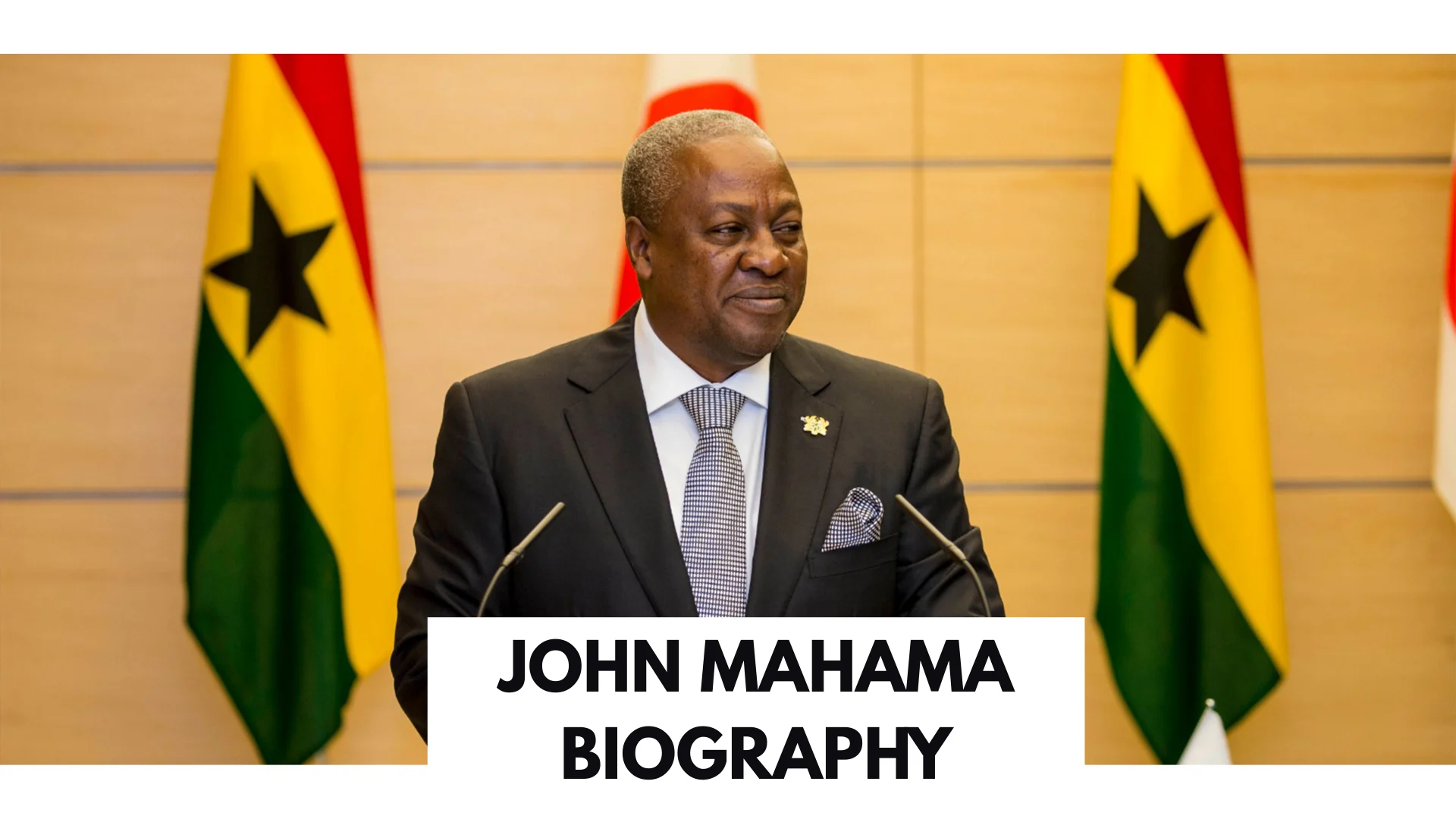
John Dramani Mahama was born on 29 November 1958 in Damongo, then part of the West Gonja district of what is now the Savannah Region of Ghana. He is the son of Emmanuel Adama Mahama — a rice farmer, former Member of Parliament for West Gonja, and the first Regional Commissioner of the Northern Region under Ghana’s first president.
John Mahama’s early education began at Achimota Basic School in Accra. Later, he attended Ghana Secondary School in Tamale. He went on to study at the University of Ghana, Legon — graduating in 1981 with a Bachelor of Arts degree in History. He then returned to Tamale to teach history at a secondary school for a period.
Later, he pursued postgraduate studies in social psychology at the Moscow Institute of Social Sciences — obtaining a postgraduate degree in 1988.
Before entering politics, Mahama worked abroad and in civil society. From 1991 until 1995, he served as Information, Culture and Research Officer at the embassy of Japan in Accra. After that, he worked with the humanitarian organisation Plan International — managing international relations, sponsorship, communication and grants.
Entry into Politics
Mahama’s formal political career began in 1996 when he was elected to the Ghanaian Parliament as representative for the Bole-Bamboi constituency. Subsequently, he was appointed Deputy Minister for Communications in 1997 and later became Minister for Communications from 1998 to 2001. In his role as minister, he also served as Chairman of the national telecom regulator, playing a key part in stabilising Ghana’s telecommunications sector after deregulation.
During his tenure in parliament he held various responsibilities, including Minority Spokesperson roles, and was part of regional and international parliamentary bodies.
Rise to National Leadership — Vice President and First Presidency
In the 2008 general election, Mahama was chosen as running mate to presidential candidate John Evans Atta Mills of the National Democratic Congress (NDC). They won the election, and on 7 January 2009, Mahama was sworn in as Vice President of Ghana.
On 24 July 2012, following the sudden death of President John Evans Atta Mills, John Mahama ascended to the presidency. Later that year, on 7 December 2012, he contested the presidential election and won — earning approximately 50.7% of the vote, narrowly avoiding a runoff. He was inaugurated for his first full presidential term on 7 January 2013.
Presidency: Achievements and Challenges
During his first presidency, Mahama oversaw — according to official sources — extensive infrastructure development across multiple sectors including transportation, health, education, ports, aviation, ICT, and more. His administration also placed emphasis on social equity; for example, efforts to expand access to education, especially for girls — and he appointed several women to prominent roles in his government.
However, Mahama’s first term was not without criticism. Ghana experienced severe economic headwinds: falling global prices for major exports, rising public wage bills, increasing national debt, and a public utility crisis marked by chronic power outages (locally referred to as “dumsor” — “off-on”). These problems — along with corruption scandals — eroded public confidence. By the 2016 presidential elections, he was defeated by challenger Nana Akufo-Addo of the rival NDC’s main opposition. Mahama garnered about 44% of the vote, conceding defeat in January 2017.
Life After First Term
Even after leaving office, Mahama remained active in politics. He contested the 2020 presidential election, again representing the NDC, but was defeated by Akufo-Addo. He challenged the 2020 result at the Supreme Court, citing alleged irregularities — but the court dismissed his petition due to lack of sufficient evidence.
Return to Presidency — Second Term (2025– )
In a landmark political comeback, Mahama won the December 2024 presidential election. He was inaugurated on 7 January 2025, marking his return as President of Ghana. With this victory, he became the first president in Ghana’s history to be democratically elected to a non-consecutive second term.
As of 2025, he holds other influential regional and continental roles — including being the Second Vice Chairperson of the African Union under President João Lourenço.
Personal Life and Other Interests
John Mahama is married to Lordina Effah Mahama. The couple have children together. He is known to be an avid reader, writer, and historian. Over his career, Mahama has authored opinion pieces in various newspapers and written a memoir titled “My First Coup d’État: Memories from the Lost Decades of Africa.”
Agriculture and technology are among his personal interests. His fondness for agriculture reflects his upbringing: his father was a prominent rice farmer. Mahama has often emphasised value-addition in agriculture and encouraged youth to see farming as a viable and profitable business.
FAQ
Q: When and where was John Mahama born?
A: He was born on 29 November 1958 in Damongo, then part of West Gonja District (now Savannah Region), Ghana.
Q: What is John Mahama’s educational background?
A: He earned a BA in History from the University of Ghana, Legon (1981), then later obtained a postgraduate degree in social psychology from the Moscow Institute of Social Sciences (1988).
Q: Which political offices has John Mahama held?
A: Among others: Member of Parliament for Bole-Bamboi (1997–2009), Deputy Minister for Communications, Minister for Communications (1998–2001), Vice President of Ghana (2009–2012), President of Ghana (2012–2017; 2025–present).
Q: What notable achievements or projects did he implement during his first presidency?
A: His first term oversaw significant infrastructure development across sectors including transport, health, education, ICT, ports, aviation, oil and gas; and efforts to improve social equity and education access — especially for girls.
Q: Why did John Mahama lose the 2016 presidential election?
A: His government faced economic difficulties, increasing national debt, power shortages (“dumsor”), and public dissatisfaction over corruption allegations — which eroded his popularity, leading to his defeat.
Q: What is significant about his return to power in 2025?
A: With his victory in the December 2024 election and inauguration on 7 January 2025, Mahama became the first Ghanaian president to be democratically elected to a second, non-consecutive term.
Conclusion
John Dramani Mahama’s story is one of resilience, dedication, and a deep commitment to public service. From his modest beginnings in Damongo to education, teaching, national service, and years of political work — rising from MP to minister, vice president, and ultimately president — his journey exemplifies the arc of a public servant devoted to national development.
Though his first presidency faced serious challenges, including economic headwinds and public dissatisfaction, his return to power in 2025 shows both his enduring appeal and the trust many Ghanaians still place in his leadership. Beyond politics, his interests in education, social equity, agriculture, writing and history reflect a leader with a broad vision for Ghana’s future.
Whether one views his record critically or favourably, John Mahama remains a central figure in Ghana’s contemporary history — a man whose life and work continue to shape the nation’s destiny.
William Ruto Biography: Politics, Tribe, Parents, Education, Wife, Age & Net Worth 2025
Oupa Magashula Biography: Cause of Death, Age, Net Worth, Tribe, Wife, Children

Malik Basintale Biography: Education, Net Worth, Age, Politics, Tribe
About The Author
