Nana Konadu Agyeman-Rawlings Biography: Death, Husband, Tribe, Children, Net Worth
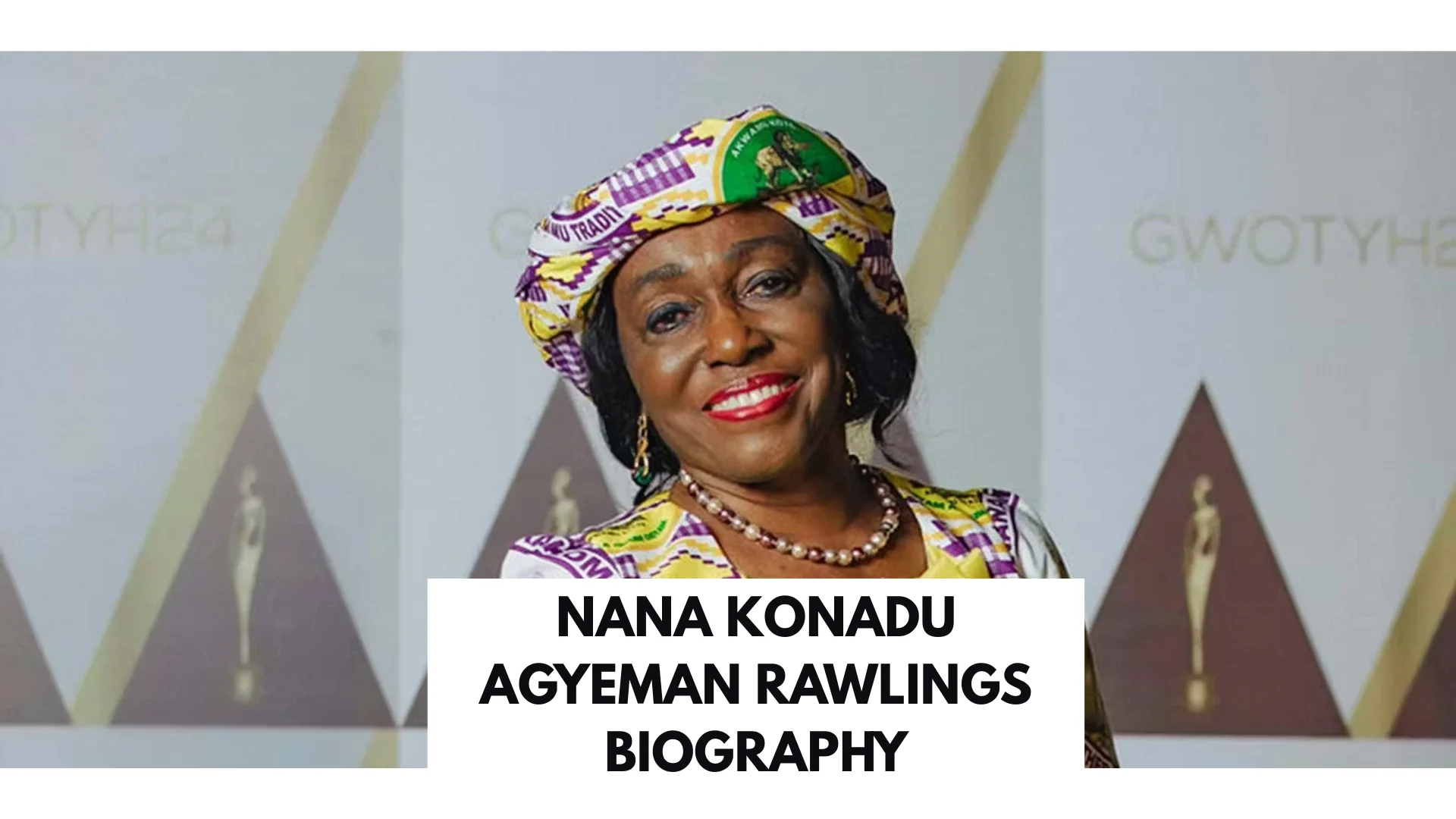
Nana Konadu Agyeman-Rawlings was one of Ghana’s most visible and influential public figures for decades — long remembered as the country’s longest-serving First Lady, a grassroots organiser, women’s rights champion, and a politician who took her activism into the electoral arena.
Her life spanned roles as a community organizer, national campaigner for women’s empowerment, founder of the 31st December Women’s Movement, and a presidential candidate who sought to broaden the political possibilities for Ghanaian women.
Early life and education
Born on 17 November 1948 in Cape Coast, in Ghana’s Central Region, Nana Konadu Agyeman (later Agyeman-Rawlings) grew up in a period of dramatic social and political change. She attended notable Ghanaian schools and pursued further studies in art, interior design, and community-development courses — including programmes abroad — sharpening both cultural and organisational skills that would later define much of her public work.
Marriage and rise to public prominence
Nana Konadu married Jerry John Rawlings in 1977. When Rawlings first briefly led the country in 1979 and then returned to power in a coup at the end of 1981, Konadu assumed the public responsibilities that accompany being First Lady. Unlike a purely ceremonial spouse, she turned the role into a platform for social change, focusing on women, children, education and community development.
The 31st December Women’s Movement — an organisational legacy
Perhaps her most enduring contribution was the 31st December Women’s Movement (DWM), founded in 1982. Under her leadership the movement mobilised millions of women across Ghana, establishing preschools, adult literacy programmes, health outreach and income-generating schemes. Through local organising and advocacy, the DWM became a major force in rural and urban development — often cited as a pioneering example of how First Ladies can use influence to create sustainable social programmes.
Policy influence and social reform
While First Lady, Nana Konadu used her platform to press for reforms and social protections affecting women and children. The DWM’s activities supported preschool education, maternal and child health interventions, and civic awareness. Her advocacy contributed to conversations about women’s inheritance rights and access to finance.
Political career and the National Democratic Party (NDP)
Following years of active involvement in the National Democratic Congress (NDC), Konadu Agyeman-Rawlings sought formal party leadership roles and in 2009 became First Vice-Chair of the NDC. After an unsuccessful internal bid in 2011 to become the party’s presidential candidate, she broke away to form the National Democratic Party (NDP). In 2016 she ran for president, making a high-profile bid as a female presidential candidate and further entrenching her reputation as a political trailblazer.
Public recognition and international ties
Nana Konadu represented Ghana and its women on many international platforms. During her time as First Lady she participated in study and fellowship programmes abroad, and she and her husband received honorary degrees in recognition of their service. Her work drew attention from international partners and civil society groups interested in women’s empowerment, community development and early childhood education.
Later life and passing
Remaining a public figure well after 2001, Nana Konadu continued to comment on national affairs, mentor younger leaders and support her daughters’ paths. She passed away on 23 October 2025; her death prompted tributes from across Ghana and abroad that reflected both affection and recognition of her long record of public service.
Personal life and family
Nana Konadu and Jerry Rawlings had four children. Her family life and public career were often intertwined — she combined the roles of wife, mother, activist, and politician while maintaining a high public profile.
FAQs
When and where was Nana Konadu Agyeman-Rawlings born?
She was born on 17 November 1948 in Cape Coast, in Ghana’s Central Region.
What is the 31st December Women’s Movement?
Founded in 1982, the movement is a grassroots organisation focused on women’s empowerment, early-childhood education, literacy, health and income-generating projects across Ghana.
Was she ever a presidential candidate?
Yes. After years with the NDC, she founded the NDP and ran for president, making a high-profile bid in 2016.
What reforms is she most associated with?
She is associated with grassroots women’s empowerment projects, expansion of preschool education, adult literacy, and the broader elevation of gender issues within Ghanaian policy debates.
How is her legacy remembered today?
Her legacy lives in the community projects, preschools and women’s groups spawned by the DWM, and in the generation of female leaders she mentored.
Conclusion
Nana Konadu Agyeman-Rawlings reshaped the role of First Lady in Ghana: from ceremonial role to active social reformer and political actor. Her organisation, the 31st December Women’s Movement, mobilised millions and created tangible community projects that continue to benefit Ghanaians. Her political engagement showed women could seek the highest offices of the land. Though she passed on 23 October 2025, her influence endures in the institutions and leaders she helped build.

Stanley Livondo Biography: News, Age, Wife, Tribe, Net Worth, Religon

Philip Aroko Biography: Career, Education, Wife, Net Worth, Age, Tribe, Nationality

Prince Mashele Biography: Education, Tribe, Age, Net Worth, Career
About The Author
