Nigel Farage Biography: Politics, Net Worth, Age, Wife, Children, Wikipedia
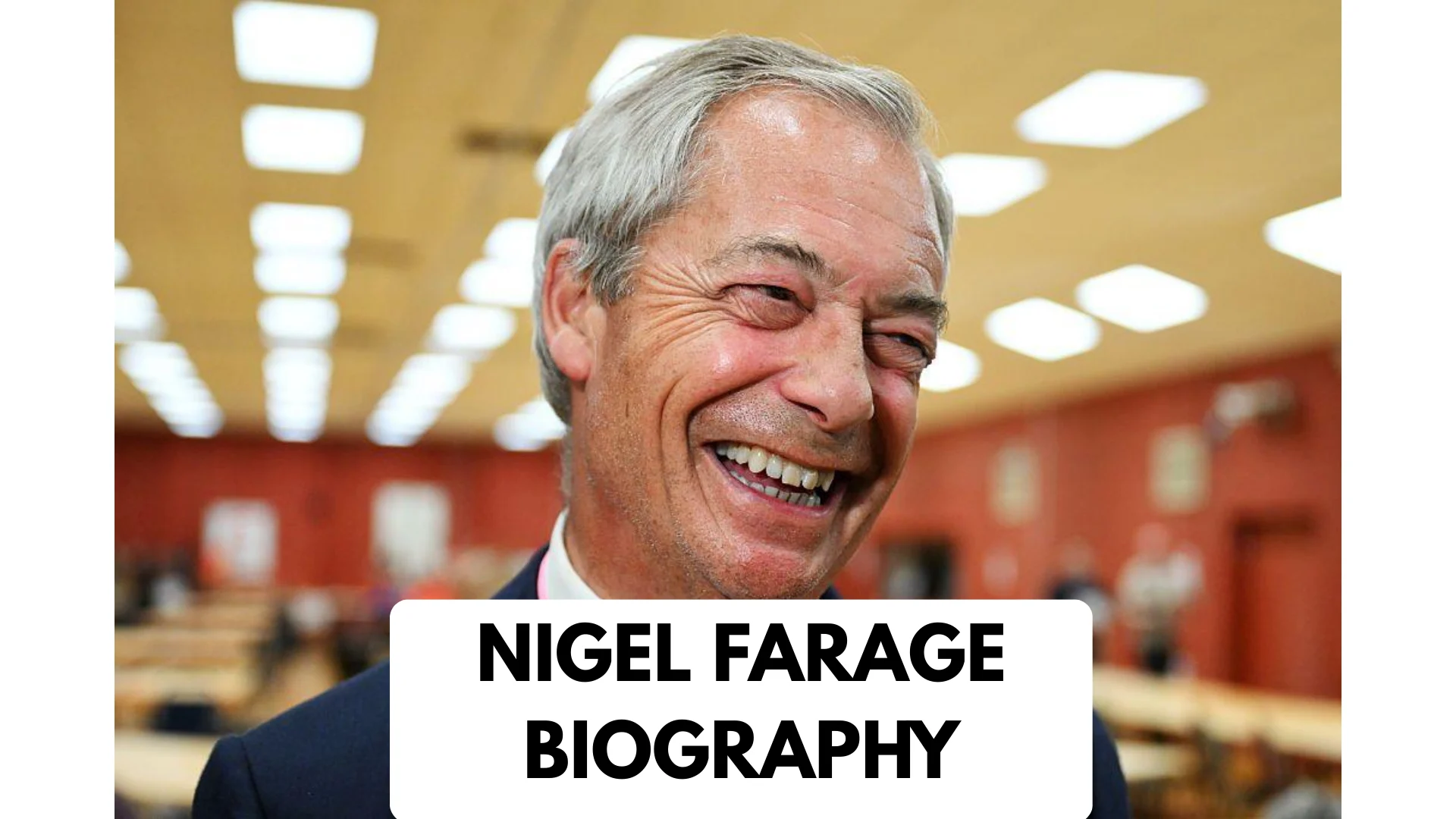
Nigel Paul Farage is one of the most recognisable and controversial figures in recent British political history. Known for his central role in the campaign for Brexit, his distinctive speaking style, and a political career that has spanned decades, Farage transformed from a commodities trader in the City of London into a leading Eurosceptic voice who reshaped UK politics. This biography traces his early life, career milestones, political positions, controversies, and the legacy he continues to build.
Early life and background
Nigel Farage was born on 3 April 1964 in Farnborough, Kent, England. After attending Dulwich College, he entered the City and began a career as a commodities trader — a background he later used to frame himself as an outsider to career politicians. His working-life origins and family history shaped both his public persona and political narrative.
From the City to politics
Farage’s move into politics came after growing disillusioned with Conservative policy on Europe following the Maastricht Treaty. He became politically active in the early 1990s, joining the Anti-Federalist League and helping to found the UK Independence Party (UKIP) in 1993. His City career continued in parallel for several years while he built UKIP into a national force.
Rise in the European Parliament
Farage was first elected to the European Parliament in 1999 and continued to be re-elected in subsequent European elections. As an MEP he became the public face of British Euroscepticism — energetic, media-savvy, and willing to frame EU politics as distant and unaccountable. Under his leadership UKIP made significant electoral gains in European elections, culminating in strong performances in 2009 and 2014 that increased pressure on the UK government to hold a referendum on EU membership.
Farage served as UKIP leader across multiple terms. He cultivated a populist style that mixed direct, plain-spoken rhetoric with a media-first approach. UKIP’s surge in the 2014 European elections and continued pressure helped make the 2016 Brexit referendum politically unavoidable. Farage’s campaigning — alongside many others on the Leave side — was pivotal in the referendum outcome that eventually led to the UK leaving the EU.
The Brexit Party and Reform UK
After UKIP declined, Farage launched the Brexit Party in 2019 (later rebranded as Reform UK) as a vehicle to press for a decisive Brexit and capitalise on populist sentiment. He used the platform to criticise both main parties and to demand political accountability. In 2024 he returned to frontline politics as leader of Reform UK and was elected to Parliament as MP for Clacton.
Political positions and public image
Farage’s positions are broadly described as right-wing populist, strongly Eurosceptic, and critical of current immigration policies. He has emphasised national sovereignty, reduced EU influence over UK law, and scepticism of international institutions. His direct style and media presence — including radio and TV — have amplified his influence beyond formal offices.
Controversies and criticisms
Farage’s career has been accompanied by repeated controversies — from rhetoric criticised as divisive to disputes within his parties. In 2023 he was at the centre of debate when his Coutts bank account was closed. More recently, in late 2025, investigative reports surfaced with allegations about his conduct during his school years; he has denied some claims and characterised others as being seen differently in modern times. These episodes have intensified debate around his fitness for future high office.
Personal life
Farage has been married twice and has four children. He is known for his conversational manner — often earthy and blunt — and for cultivating a persona of plain-speaking authenticity. While married to Kirsten Mehr, questions occasionally surfaced about how his personal connections influenced perceptions of his politics.
Legacy and influence
Farage’s impact on British politics is undeniable: he helped mainstream Euroscepticism, influenced the agenda that led to the Brexit vote, and reshaped media and campaign tactics for populist movements. Whether his legacy will be viewed primarily as a vindication of popular sovereignty or as a polarising force depends on future political histories and the long-term outcomes of Brexit.
FAQs
Q1: When was Nigel Farage born?
A: 3 April 1964.
Q2: What parties has Farage led?
A: UKIP, the Brexit Party (later Reform UK), and Reform UK in its current form.
Q3: Was Nigel Farage an MEP?
A: Yes — he served as an MEP from 1999 until the UK’s withdrawal from the EU in 2020.
Q4: Is Nigel Farage an MP?
A: Yes — he was elected MP for Clacton in 2024.
Q5: What controversies surround Farage?
A: Controversies include critiques of his rhetoric and positions, the Coutts bank account episode, and recent school-era allegations reported in late 2025.
Conclusion
Nigel Farage’s trajectory from a City commodity dealer to a defining figure in the Brexit movement illustrates how determined political campaigning and media skill can transform an individual into a national force. Loved by supporters as a defender of sovereignty and criticised by opponents as polarising, Farage has left an indelible mark on UK politics that will be debated for years to come.
Narendra Modi Biography: Wikipedia, Net Worth, Age, Wife, Children, Religion
Prince Mashele Biography: Education, Tribe, Age, Net Worth, Career

Sonia Nzilani Biography: Awards, Parents, Age, Net Worth, Career, Education
About The Author
