Sheikh Dahiru Usman Bauchi Biography: Caise of Death, Net Worth, Wife, State of Origin
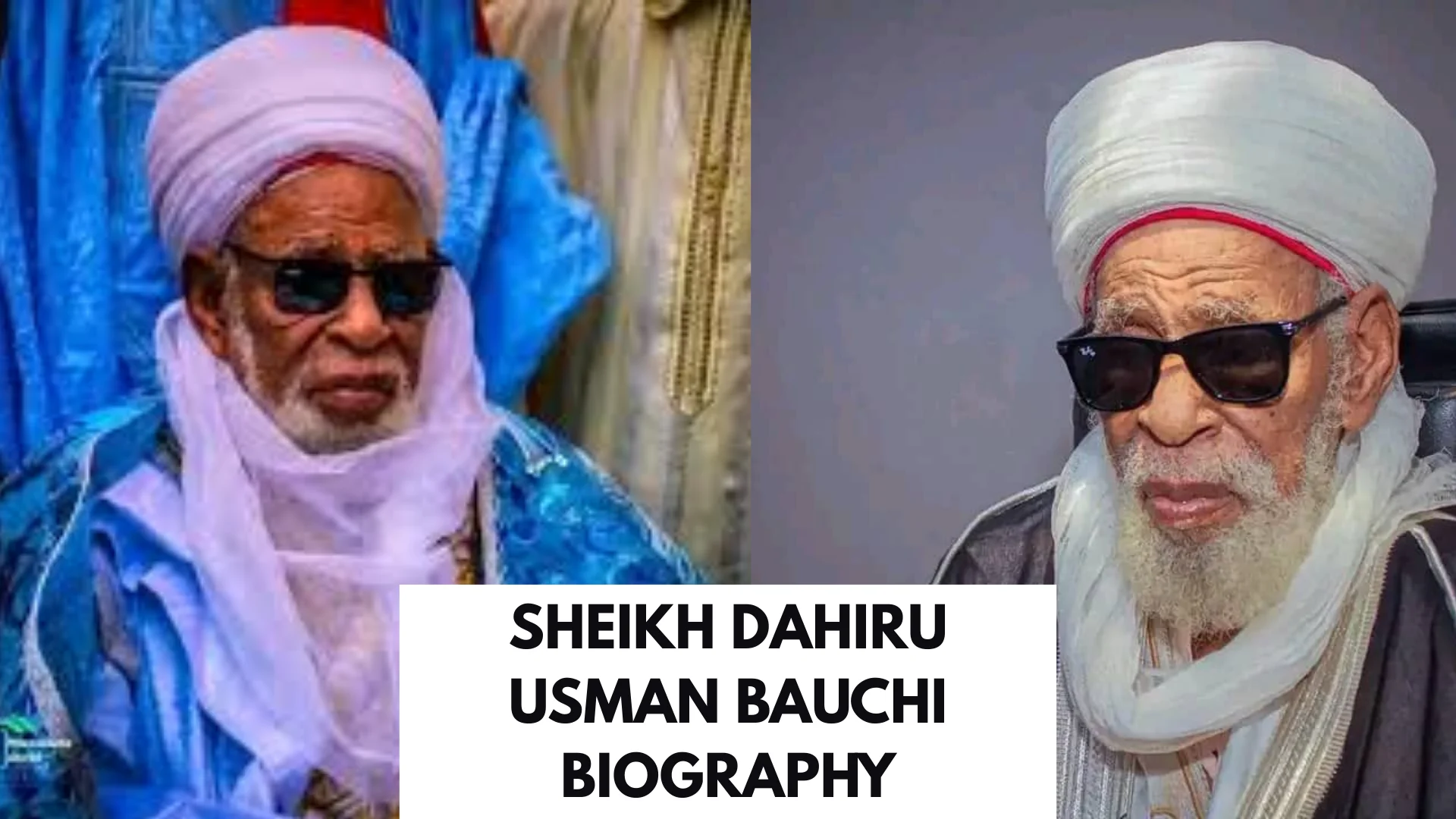
Sheikh Dahiru Usman Bauchi (commonly called Sheikh Dahiru Bauchi) was one of Nigeria’s most prominent Islamic scholars and the leading figure of the Tijaniyya (Sufi) order in Nigeria. Over a lifetime spanning nearly a century, he became widely respected for his Qur’anic knowledge, spiritual leadership, and influence across West Africa. This article provides a deep, well-sourced biography of his life, religious contributions, public role, controversies, and the legacy he leaves behind.
Early life and family background
Dahiru Usman was born in Nafada (then part of Bauchi Province; now in Gombe State) in June 1927. He was born into a devout Muslim family: his father, Alhaji Usman, was a local Qur’anic teacher and an early guide in Dahiru’s religious education. From childhood he memorized the Qur’an and pursued traditional Islamic studies under local scholars, following the classical pattern of West African Islamic education.
Religious training and spiritual lineage
Sheikh Dahiru’s formal training included tutelage under notable regional scholars of his era. He received authorization (ijazah) and spiritual transmission within the Tijaniyya tariqa, a Sufi order with deep roots in West Africa. Over decades he consolidated his reputation as a master of Qur’anic exegesis (tafsir), hadith, and Sufi ethics. His connections to the wider Tijani network, including links to West African Tijani leaders, helped amplify his influence beyond Nigeria’s borders.
Public role and positions
Sheikh Dahiru served in many advisory and leadership roles within Nigeria’s Islamic institutions. He was often described as the spiritual leader of the Tijaniyya in Nigeria, and he held respected roles in national Islamic councils where his opinions on religious matters carried weight. His public deliverables included sermons, Qur’anic commentaries, and fatwas addressing social and religious questions for his followers.
Teaching style and theological emphasis
Known for long, clear, and methodical lectures, Sheikh Dahiru emphasized strict Qur’anic learning, ritual piety, and Sufi practices associated with the Tijaniyya—such as the wazifa and spiritual disciplining—balanced with mainstream Maliki jurisprudence which is common in the region. He trained a large number of students and was widely sought after for both spiritual counsel and formal instruction.
Influence and reach
Sheikh Dahiru’s influence was national and regional. Across northern Nigeria and into neighboring countries, many followed his teachings and sought his guidance on matters of religion, social behavior, and community disputes. His role as a senior cleric made him an important voice in moments of communal tension and in conversations about Islamic law in Nigeria.
Notable events and controversies
Over time, Sheikh Dahiru’s prominence placed him in the center of inter-sect debates that sometimes became heated. There were recorded episodes—such as disputes with rival groups—where doctrinal disagreements sparked tensions. In 2009 he was briefly detained while on pilgrimage in Saudi Arabia amid broader sectarian friction; on other occasions his positions or statements generated public debate among Nigeria’s religious communities.
Personal life
Sheikh Dahiru’s family life reflected the cultural norms of his milieu. He was reported to have been married multiple times and fathered many children; public reports and biographies often mention extended family networks typical of senior religious leaders in the region. His private life was largely kept out of the limelight compared with his public religious work.
Final years and death
In late November 2025 Sheikh Dahiru Usman Bauchi passed away after a prolonged illness. Nigerian national media and Islamic organizations confirmed his death, noting his advanced age and the deep mourning among followers. He died in late November 2025 at a hospital in Bauchi; reports list the date of passing in late November 2025.
Legacy: students, writings, and social impact
Sheikh Dahiru’s legacy lives on through the students he taught, the sermons and lectures that were recorded by adherents, and the community institutions shaped by his leadership. Many remember him for his commitment to Qur’anic education and for maintaining a Sufi path that emphasized inward discipline and outward community engagement. As with many major religious figures, assessments of his legacy differ by community: followers celebrate his learning and spiritual depth, while critics focus on moments of contention.
Why his life matters today
Understanding Sheikh Dahiru’s life offers insight into modern West African Islam—how Sufi orders operate socially and spiritually, how religious leaders influence politics and society, and how inter-sect competition shapes public life. His long life spanned colonial, post-colonial, and contemporary Nigeria, making him a living repository of religious memory for several generations.
Frequently Asked Questions (FAQs)
When and where was Sheikh Dahiru Bauchi born?
He was born in Nafada (then part of Bauchi Province) in June 1927. Sources commonly list June 29, 1927 (2nd Muharram 1346 AH).
What religious order did he lead?
Sheikh Dahiru was a senior leader in the Tijaniyya Sufi order in Nigeria.
Did he write books or tafsir?
He was known for Qur’anic teaching and exegesis; many teachings exist in recorded lectures and transcriptions circulated among followers.
How old was he when he died?
Sheikh Dahiru died in late November 2025; most mainstream reports list him as 98 (born in 1927).
What was his stance on inter-sect relations?
He defended Tijaniyya practices and engaged in doctrinal debates with other movements; his public role often required delicate navigation of inter-community relations.
Conclusion
Sheikh Dahiru Usman Bauchi was a defining religious figure in modern Nigerian Islam. His life — rooted in classical Qur’anic learning, shaped by Sufi discipline, and lived out on a public stage — provides valuable lessons about religious leadership, spiritual transmission, and the social role of clerics in West Africa. Whether admired for his scholarship or critiqued for his involvement in sectarian debates, his long-standing influence and the institutions he helped nurture will continue to shape Islamic life in the region for years to come.

Orson Welles Biography: Wikipedia, Cause of Death, Net Worth, Children, Films

Joshua Baraka Biography: YouTube, Age, Songs, Net Worth, Girlfriend, Parents

Pavan Sai Biography: Net Worth, Age, Wife, Children, Awards, TV Shows
About The Author
