William Ruto Biography: Politics, Tribe, Parents, Education, Wife, Age & Net Worth 2025
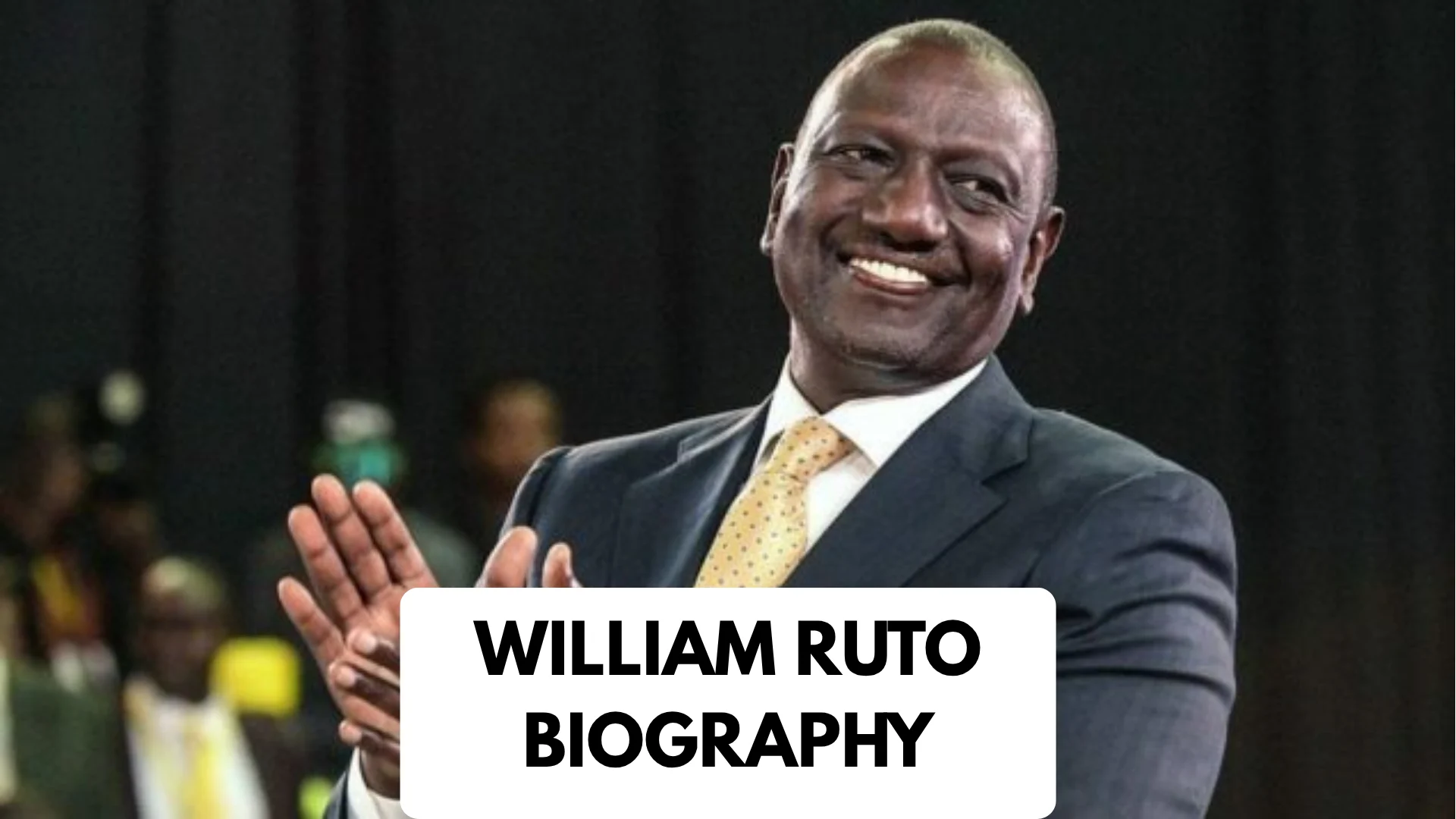
William Kipchirchir Samoei Arap Ruto is a prominent Kenyan politician who rose from humble roots to become the fifth President of Kenya. Known for his “hustler” narrative and grassroots appeal, Ruto’s political journey spans decades — from local activism to multiple ministerial roles, a long stint as deputy president, and finally the presidency.
Early life and family
William Ruto was born on 21 December 1966 in Sambut village, Kamagut in Uasin Gishu County. He is from the Kalenjin community and grew up in a rural setting where his family worked the land. His early years shaped his public image as someone who understands the struggles of ordinary Kenyans.
Education and academic achievements
Ruto attended local primary schools before proceeding to Wareng Secondary School and then Kapsabet High School for A-levels. He earned a Bachelor of Science degree in Botany and Zoology from the University of Nairobi in 1990. Later in life he returned to academia, earning a Master of Science and eventually a PhD (the University of Nairobi is commonly cited as the awarding institution). His academic credentials have been part of his public profile as he balanced politics with further studies.
Early political career and parliamentary service
Ruto entered national politics in the 1990s. He was first elected Member of Parliament for Eldoret North in 1997. During his early parliamentary career he served under different party banners during a time of fluid party realignments in Kenya. His parliamentary seat and constituency work established him as a key regional leader in the Rift Valley.
Cabinet posts and national profile
Over the years Ruto served in several cabinet roles, including short stints as Minister for Home Affairs, Minister for Agriculture, and Minister for Higher Education. These positions expanded his national profile and connected him with agricultural and education policy circles — both strategically important areas in Kenya.
Deputy President (2013–2022)
In 2013 William Ruto was elected Deputy President of Kenya alongside President Uhuru Kenyatta. He served two terms as deputy president (2013–2022), becoming one of the most prominent figures in the Kenyan executive and often representing the administration at home and abroad. His tenure as deputy cemented both his national standing and his reputation as a shrewd political operator.
The 2022 presidential bid and election
Ruto ran for president in the August 2022 election on a United Democratic Alliance (UDA) ticket under the Kenya Kwanza Alliance. He campaigned heavily on an economic message framed around the “hustler” narrative — positioning himself as the champion of small businesspeople and ordinary workers against what he termed an entrenched elite. The August 9, 2022 election was tightly contested; the Independent Electoral and Boundaries Commission (IEBC) declared Ruto the winner with roughly 50.49% of the vote, a close margin that prompted a legal challenge which was later dismissed by Kenya’s Supreme Court.
Presidency (since September 2022)
William Ruto was inaugurated as Kenya’s fifth president on 13 September 2022 at Moi International Sports Centre, Kasarani. The inauguration marked the formal start of his term and a transition to a presidency focused on economic reforms, agricultural productivity, and job creation. Ruto pledged to tackle cost-of-living pressures, prioritize agriculture, and accelerate economic inclusion policies for small entrepreneurs.
Key policies and priorities
Ruto has emphasized economic transformation grounded in agriculture and private-sector-led growth. He has discussed initiatives such as sovereign wealth and infrastructure funds to mobilize capital, reduce reliance on debt, and support major projects — a policy direction seen in public statements and subsequent plans developed by his administration. The presidency has also publicly committed to addressing climate-related challenges and other structural issues in Kenya’s economy.
Controversies and challenges
Like many high-profile politicians, Ruto’s career has not been without controversy. He faced opposition and criticism on multiple fronts over political alliances, campaign conduct, and accusations from rivals. As president he confronts economic constraints (rising debt and cost of living), governance pressures, and the need to deliver on campaign promises to a diverse electorate.
Personal life
Ruto is married with children and often highlights his family life in public messaging. His personal story — from a rural upbringing to national leadership — is central to his political brand, especially his emphasis on hustle, entrepreneurship, and opportunity for ordinary citizens.
Legacy so far
Ruto’s legacy is still forming. Early signs indicate his administration will be judged on economic reforms, job creation, and how successfully it manages Kenya’s fiscal challenges while pursuing infrastructure and agricultural modernization.
FAQs
When was William Ruto born?
He was born on December 21, 1966.
Where did Ruto study?
He attended the University of Nairobi, earning a BSc and later postgraduate degrees including an MSc and PhD.
When did Ruto become President of Kenya?
He was inaugurated on September 13, 2022.
What party does Ruto lead?
He ran in 2022 on the United Democratic Alliance (UDA) ticket.
What are Ruto’s main policy priorities?
Economic empowerment for small entrepreneurs (“hustlers”), agricultural modernization, infrastructure financing and fiscal reforms.
Conclusion
William Ruto’s life and career tell the story of political persistence: from grassroots organizing and constituency service to ministerial roles, a decade as deputy president, and ultimately the presidency. His focus on economic inclusion, agriculture, and entrepreneurial opportunity reflect the platform that propelled him to the presidency. As Kenya navigates economic headwinds and social expectations, Ruto’s success will be judged by tangible improvements in livelihoods, fiscal stability, and national unity.

Sheikh Gumi Biography: Children, Son, Tribe, State of Origin, Education

Sesi Baloyi Biography: Children, Husband, Net Worth, Age, Education

George Natembeya Biography: Parents, Wife, Children, Tribe, Net Worth, Age
About The Author
